
What Cutting Back Actually Looks Like
I wrote a while back about why cutting back on alcohol is harder than people expect, and the short version is that alcohol has usually been doing something real for you, so removing it without addressing that leaves a gap. That post explains the problem. This one is about the mechanics, because understanding why something is hard does not tell you what to do on a Tuesday.
I serve as Clinical Director of Moderation Management alongside my private practice, so this is territory I spend a lot of time in. What follows is not a program. It is the set of things that tend to actually matter when someone decides to change their drinking without deciding to quit.

When Someone You Love Is Drinking or More Than You Are Comfortable With
There is a particular kind of tiredness that comes from loving someone who drinks. It is not the tiredness of a hard week. It is the tiredness of running a calculation in the background of your own life, all day, every day. How much is in the recycling. Whether tonight is going to be one of the good ones. Whether to say something, and if you say something, whether it will land or whether it will turn into the same conversation you have already had eleven times.
If that is where you are, I want to start by naming something that often goes unsaid. You are doing a lot of work. Most of it is invisible, including to the person you are doing it for, and often including to you.

When Someone You Love Is Drinking: A Guide for Caregivers and Family
You already know how many were in the recycling this week, and you know roughly what time the evening turns, and you know which version of it you're bracing for before you've even gotten your coat off. Somewhere along the way you learned to read a room in about three seconds without appearing to look at anybody, which is a skill nobody trained you in and one you picked up the way people pick up a second language after moving somewhere they never planned to stay.

Harm Reduction Therapy in Oklahoma
If you're the person who loves someone in that position, and you've spent a while looking for something to offer that isn't an ultimatum, there's a place for you here too. You don't need their permission or their participation to begin, which is the part most people don't realize until somebody says it out loud. I've written about that more fully in what actually helps when someone you love is drinking, but the short version is that you're allowed to get support for your own sake rather than as a strategy for changing them.

Moderation vs. Abstinence: How to Know Which Goal Actually Fits You
The question isn't whether you can moderate. It's whether moderation is what you actually want. Here's how to think through it honestly, without anyone pushing you toward a predetermined answer.

What Trauma-Informed Therapy Actually Means (And Why It Matters for Your Nervous System)
Trauma-informed therapy isn't just a buzzword. It changes how the whole therapeutic relationship works. Here's what it actually means, what it looks like in practice, and why it might be what you've been missing.

Why Anxiety and Alcohol Are Such a Complicated Pair
The anxiety-alcohol cycle is real, and it's not a character flaw. Here's what's actually happening — and how to start untangling it.

You Don't Have to Hit Rock Bottom to Get Support for Your Drinking
There is a version of this story that gets told a lot. Someone loses their job, their relationship, their health. They finally admit they have a problem. They get help. That is the narrative we have inherited about alcohol and recovery, and it has done a lot of damage.
Because most people who quietly wonder about their drinking never reach that point. They are functional. They are showing up. They are handling things. And they are still, somewhere in the back of their mind, asking a question they have not said out loud yet.
That question is enough to start.

What Is Harm Reduction Therapy? A Non-Judgmental Approach to Alcohol and Substance Use
If you have been Googling things like "therapist who won't tell me to quit drinking" or "do I have to want to stop going to therapy," you are in the right place. Let me explain what harm reduction therapy actually is, what it is not, and whether it might be worth a conversation.

Why It’s So Hard to Cut Back on Alcohol
If you’ve ever tried to cut back on alcohol and found it harder than you expected, you’re not alone. The difficulty isn’t about willpower or discipline. It’s about the fact that alcohol has probably been doing something real and useful for you. And that matters.

High-Functioning Drinking: When to Pay Attention
Alcohol can be a tricky thing to get perspective on – especially when everything on the surface looks fine. You’re showing up to work, maintaining your relationships, keeping life moving. Drinking might just feel like part of the routine. A way to unwind, connect, or take the edge off.

Questioning Your Drinking? You Don’t Need a Label to Start
If you've ever found yourself wondering about your relationship with alcohol — not in a dramatic way, just a quiet, nagging curiosity — that's worth paying attention to. You don't have to fit a particular image or identify with a specific label to ask honest questions about your drinking. And you certainly don't have to have it all figured out before you start exploring.
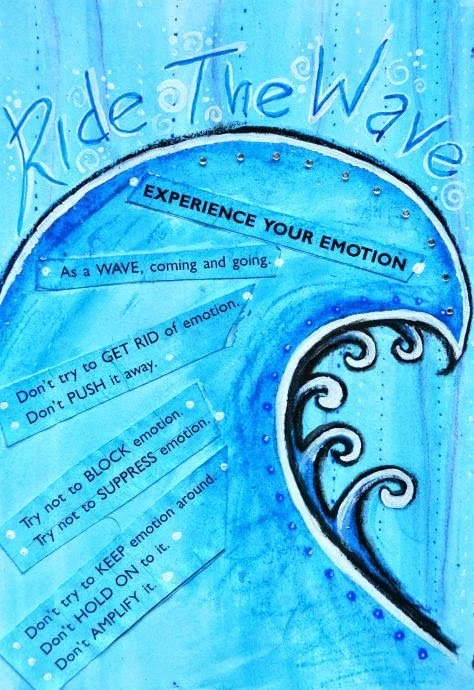
Cravings Aren’t Commands: How Urge Surfing Can Set You Free
Urge surfing is a mindfulness-based skill that helps you respond to alcohol cravings without reacting automatically. This article explains how cravings work, why they rise and fall, and how learning to “ride the urge” can support moderation, choice, and self-trust—without relying on willpower or shame.